
Intent
Our core purpose is to equip all pupils with the skills and confidence to develop their mathematical fluency, problem solving and reasoning in preparation for assessment (including statutory testing), further education and life beyond.
Children are encouraged to develop curiosity about number and embrace the mathematics that surrounds them each day in a variety of contexts that have meaningful connections to real life, including links with other curriculum subjects. We offer opportunities for children to develop understanding and mathematical articulacy through a cohesive progression of learning across the school in order to maximise their depth of learning. Children should be able to demonstrate a deep conceptual understanding of an area of maths and build on this over time, as well as establishing a secure knowledge of key number facts to allow them to become efficient mathematicians.
Mathematics is an opportunity for pupils to take risks, challenge themselves and work both independently and collaboratively towards solving problems.
Our ‘learning powers’ (resilience, resourcefulness, reciprocity and reflectiveness) are evident throughout mathematics. Alongside this, we promote growth mindset and ensure all children feel empowered to achieve. This supports our children to develop self-confidence when faced with mathematical challenges, allowing them to embrace mistakes as part of the learning process and in turn value the importance of effort.
We strive to accelerate progress and improve outcomes for all of our pupils each year.
Vocabulary
Children will develop the ability to apply subject specific vocabulary in mathematics through consistent modelling by adults whilst establishing a culture of high expectations for discussions and debates. Here are some examples of the mathematical vocabulary used:
Vocabulary
Implementation
The detailed specification within the National Curriculum provides a framework for our mathematics teaching. Moretonhampstead’s curriculum fully incorporates all objectives across each of the core content areas (number, measurement, geometry and statistics). In accordance with the National Curriculum, greater emphasis is placed on number to reflect its fundamental importance within mathematics.
New learning is taught in small steps, moving from supported to independent practice. We use White Rose Maths materials alongside additional resources (e.g. ‘Planpanion’) to ensure progression, challenge and enjoyment across all year groups.
Maths Rolling Programme
-
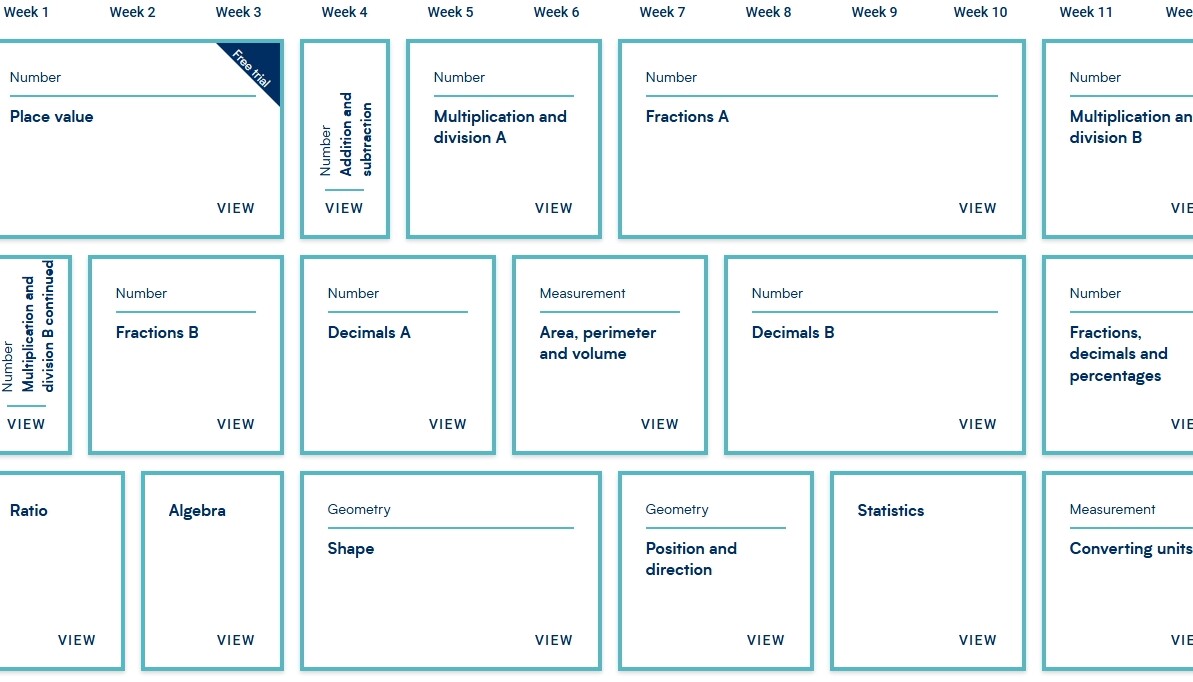
Year 5/6
-
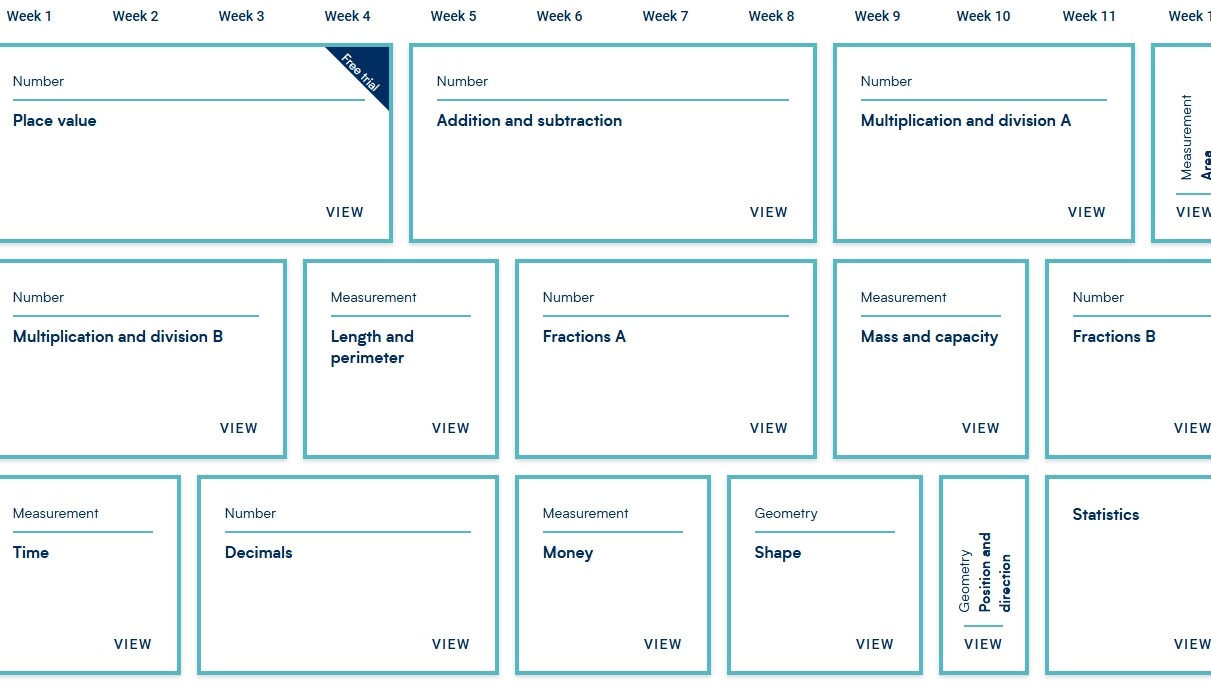
Year 3/4
-
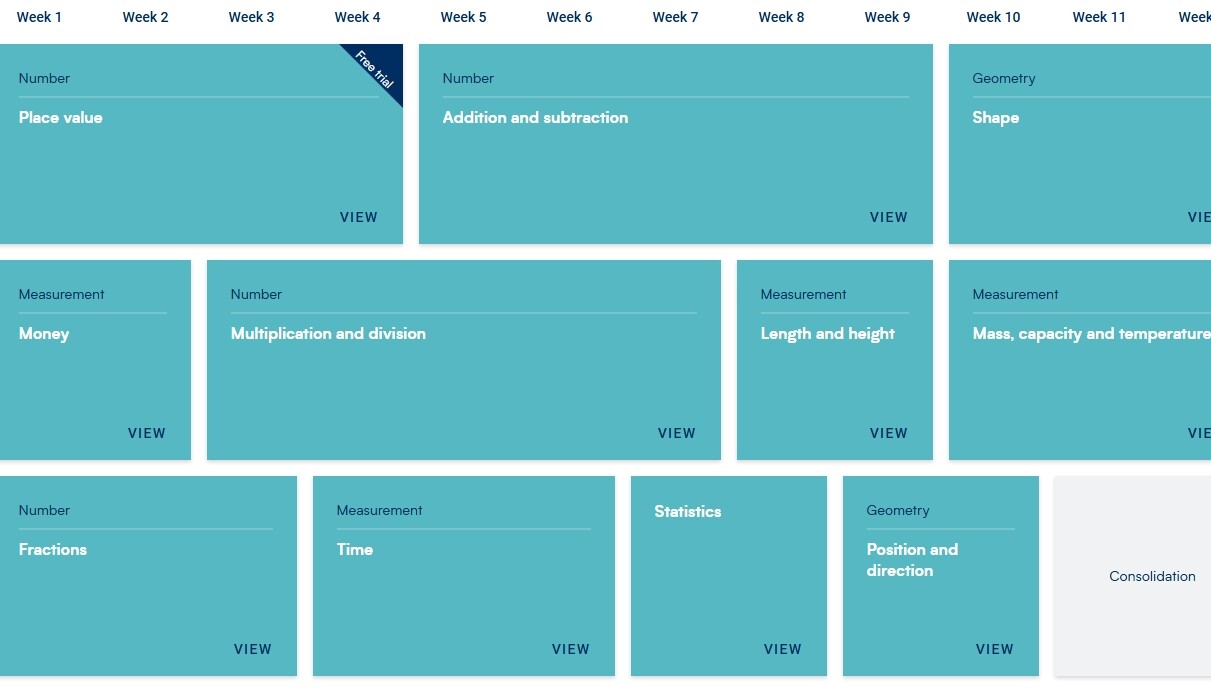
Year 2
-
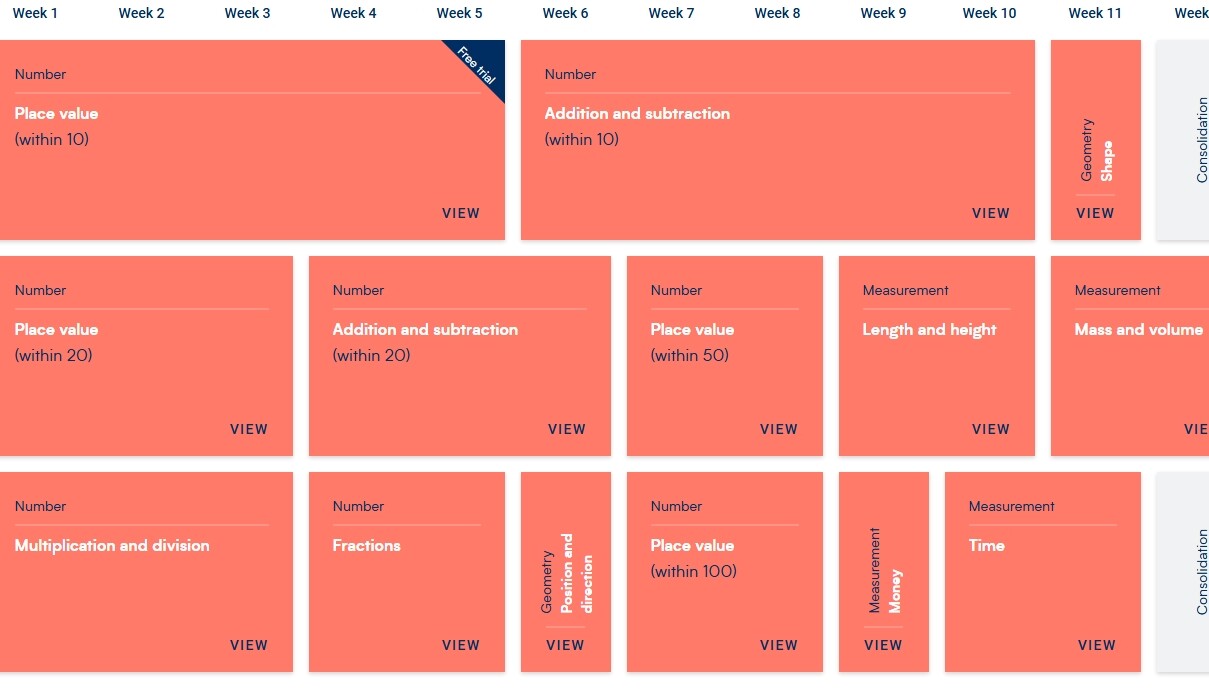
Year 1
Within each content area, learning is carefully sequenced into a progression of small, manageable steps. Each step builds on prior knowledge while preparing children for future learning, enabling steady progress through every unit and lesson. As mathematics is highly interconnected, concepts are revisited in a range of contexts throughout the curriculum. This repeated exposure helps learners make meaningful connections between new ideas and existing understanding, while also strengthening long-term retention.
Calculation Policy
There are two core strands that run throughout our maths curriculum in order for our children to become comprehensive mathematicians; fluency and reasoning & problem-solving. This involves a recall of number facts, efficient methods of calculation (arithmetic) for the former and a confident manipulation of numbers as well as making connections, logical analysis and pattern spotting for the latter.
We use the CPA approach (Concrete, Pictorial, Abstract) to develop secure conceptual understanding and confidence with different mathematical representations and resources.
We use the CAPED approach to extend and deepen learning:
-
C – Check
-
A – Another Way
-
P – Prove It
-
E – Explain
-
D – Draw
Impact
Assessment at Moretonhampstead plays a vital role in supporting children’s learning and progress. It enables teachers to identify what pupils understand, where misconceptions may exist, and which next steps are needed to deepen understanding. Through regular formative and summative assessment, teaching can be adapted to meet the needs of all learners, ensuring that children develop confidence, fluency, reasoning, and problem-solving skills. Effective assessment also helps track progress over time, informs future planning, and ensures that every child is supported and challenged appropriately within the mathematics curriculum.
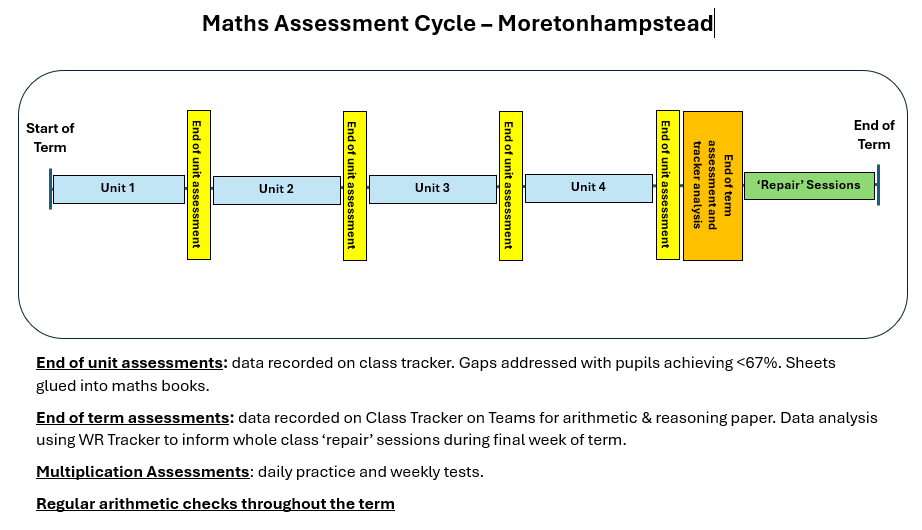
The essential skills such as problem-solving, logical thinking, and the ability to reason and make decisions with confidence are all gained from our maths curriculum. These skills support success across the wider curriculum and help children manage real-life situations such as budgeting, understanding data, and making informed choices as well as building resilience and perseverance, as children learn to approach challenges systematically.